VPS Explained: Your Flexible Hosting Solution for Growing Websites
Discover how Virtual Private Servers (VPS) bridge the gap between shared hosting and dedicated servers, offering the perfect balance of performance, control, and scalability for your growing web projects.
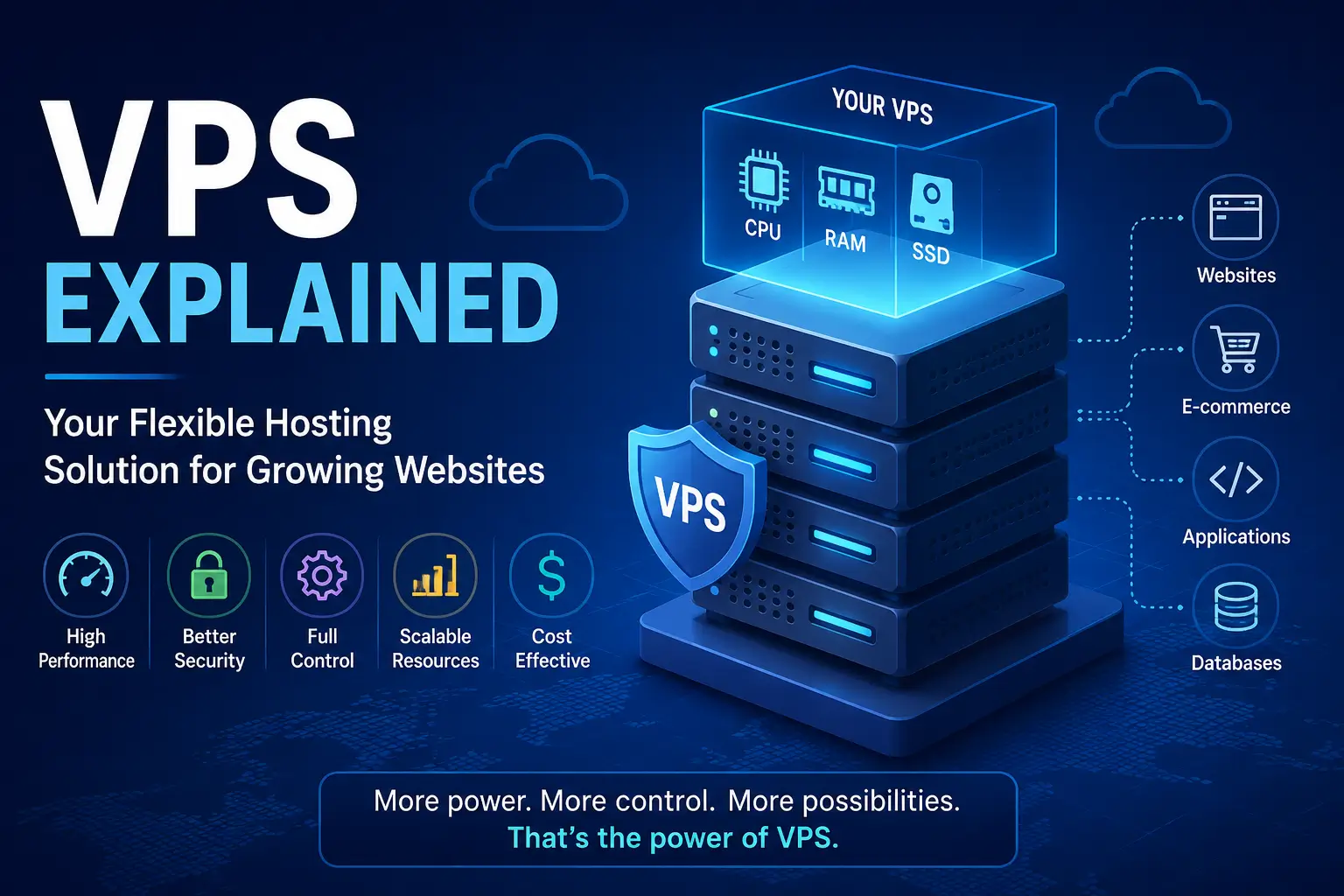
What is a VPS?
A Virtual Private Server (VPS) is a type of hosting environment that uses virtualization technology to provide you with dedicated resources on a server with multiple users. Unlike shared hosting, where you compete for resources, a VPS gives you a partitioned space with guaranteed RAM, CPU, and storage.
How Does VPS Work?
Think of a physical server as a large office building. In shared hosting, you are renting a single desk in a crowded room. With a VPS, you are renting a private office within that building. You have your own lock, your own furniture, and you don't have to worry about your neighbors' activities affecting your work.
Key Benefits of VPS Hosting
- Enhanced Performance: Since resources are dedicated, your site speed remains consistent regardless of what other users on the physical server are doing.
- Root Access: You get full control over the server environment, allowing you to install custom software and configure security settings.
- Scalability: As your website grows, you can easily upgrade your resources (RAM, CPU, Disk Space) without migrating to a new server.
- Security: Because your environment is isolated, you are protected from security vulnerabilities that might affect other users on the same machine.
When Should You Upgrade to VPS?
You should consider moving to a VPS if:
- Your shared hosting plan is no longer handling your traffic spikes.
- You need specific software or server configurations that shared hosts don't support.
- You are concerned about security and want a more isolated environment.
- You are managing multiple websites that require more power.
Conclusion
VPS hosting is the ideal middle ground for developers and businesses that have outgrown basic hosting but aren't ready for the high costs of a dedicated server. By providing a balance of flexibility, power, and cost-effectiveness, it remains the gold standard for scaling web applications.